All Posts
Technical10 min read

RAG Systems: The Complete Guide for 2026

February 5, 2026

RAG Systems: The Complete Guide for 2026

What is RAG and Why Does It Matter?

RAG (Retrieval-Augmented Generation) combines the knowledge retrieval capabilities of search engines with the language generation abilities of LLMs. Instead of relying solely on what an LLM was trained on, RAG systems pull in relevant information from your own data sources in real-time.

Why RAG Over Fine-Tuning?

  • Always up to date — RAG pulls from live data, not static training
  • Verifiable answers — Every response can cite its sources
  • Lower cost — No expensive model retraining needed
  • Data privacy — Your data stays in your infrastructure
  • Building a Production RAG System

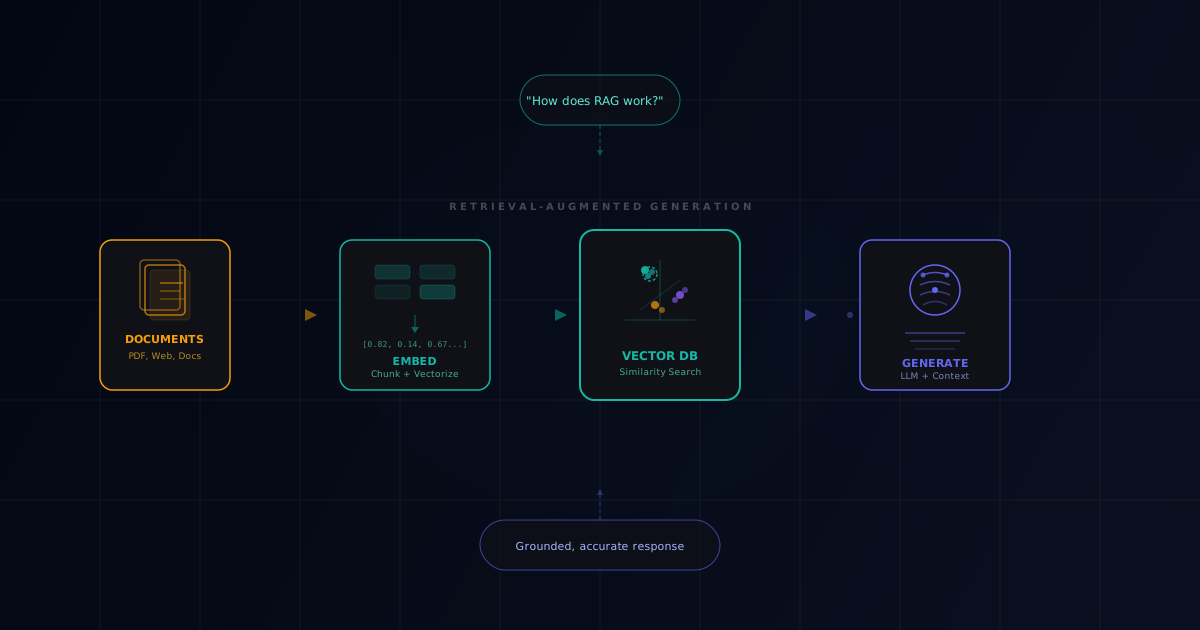
    The architecture of a robust RAG system includes:

  • **Document ingestion** — Processing PDFs, docs, web pages into chunks
  • **Embedding generation** — Converting text into vector representations
  • **Vector storage** — Efficient similarity search at scale
  • **Retrieval pipeline** — Finding the most relevant chunks for a query
  • **Generation layer** — Combining retrieved context with the LLM prompt
  • **Evaluation** — Measuring answer quality and relevance
  • Common Pitfalls

    After building RAG systems for dozens of clients, here are the mistakes we see most often:

  • Chunk sizes that are too large or too small
  • Missing metadata that would improve retrieval
  • No re-ranking step after initial retrieval
  • Ignoring evaluation metrics until production
  • Get these right, and RAG becomes the most powerful tool in your AI toolkit.